1. Introduction: The Role of Polyamide Resins in Modern Printing Inks
Polyamide resins, particularly those derived from polymerized fatty acids (dimer acids), are cornerstone raw materials in the production of high-performance printing inks. They are predominantly used as film-forming binders in solvent-based systems for flexible packaging. Their primary value proposition lies in their exceptional adhesion to non-porous substrates such as treated polyethylene (PE), polypropylene (PP), and polyester (PET) films, combined with high gloss and resistance properties
2. Resin Selection: Matching Chemistry to Application
Not all polyamide resins are equal. The first critical step is selecting the correct resin grade based on the printing method and end-use requirements.
2.1 Alcohol-Soluble vs. Co-Solvent Polyamides
For flexographic and gravure printing, alcohol-soluble polyamide resins are the industry standard. These resins are condensation products of dimer acid (C20-C44 dibasic acid mixtures) with diamines such as ethylenediamine and piperazine. They are designed to dissolve completely in lower alkanols (ethanol, isopropanol) without requiring aromatic hydrocarbons
•General Purpose Grades : Offer balanced adhesion, gloss, and blocking resistance. Ideal for surface printing on treated polyolefins .
•High Anti-Block Grades: Feature high melting points (140-150°C) and superior resistance to layer sticking. Suitable for heat-sensitive applications.
Nitrocellulose-Compatible Grades : Require less nitrocellulose (NC) than conventional resins, simplifying formulations and reducing costs while maintaining adhesion
2.2 Key Specification Parameters
When qualifying a resin, evaluate the following typical properties:
• Softening Point (Ball & Ring): Usually 100-120°C. Affects block resistance and drying speed
• Acid Value & Amine Value: Typically <10 mg KOH/g. Low values indicate stable, non-reactive resins.
• Viscosity (Gardner-Holdt): Ranges from E-H (for high-solids inks) to higher values. Impacts ink transfer and flow
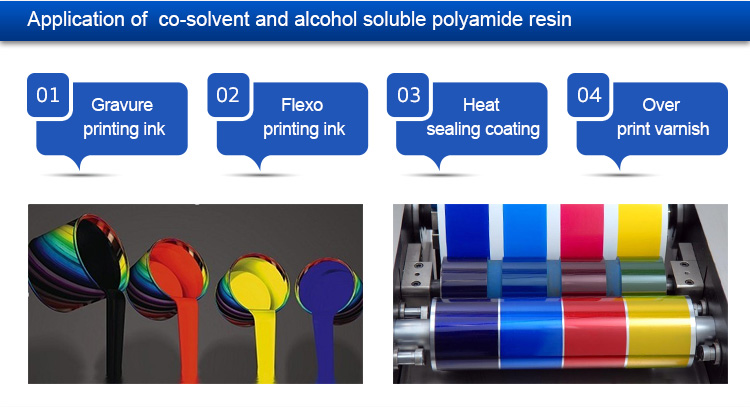
Application-Specific Formulation Strategies
Laminating Inks
For multi-layer flexible packaging (e.g., snack food wrappers), the ink must not only print well but also accept adhesive and withstand lamination.
• Requirement: High bond strength.
• Formulation: Use a high molecular weight polyamide (Mw 40,000-60,000) based on piperazine
. Avoid excessive wax which can reduce bond strength. The inclusion of APG surfactant is particularly effective here for bond enhancement -High-Speed Surface Printing
For printing on treated PE film for bags.
• Requirement: Fast drying, low odor.
• Formulation: Use low-viscosity polyamide grades. Blend with nitrocellulose to increase hardness and speed. eed press performance
Overprint Varnishes (OPV)
• Requirement: High gloss, rub resistance.
• Formulation: Use alcohol-soluble polyamide as the sole film former (15-30% resin solids). Add polyethylene waxes for slip





 IPv6 network supported


