



Hot Products

We do not simply see our products as “chemicals,” but as “Solutions” that can bring values and solve the problems of our partners.
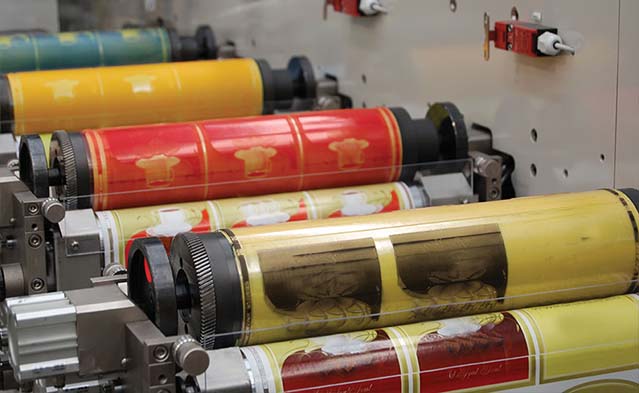

Our Application

We do not simply see our products as “chemicals,” but as “Solutions” that can bring values and solve the problems of our partners.
Why Choose Us

Quality is at the heart of everything we do.

What our clients Say

It is our code of conduct to be your responsible and reliable partner.

Bradley W. from Mexico
“There are channel partners who are just on the list, and then there are those who you truly can rely on & go to market with. Sunman is a true "partner" who understands our business and give us biggest support. That is why our business continues to grow with Sunman every year.”
View More
Gaurav R. from India
We have cooperated with Sunman company for some years, and they always think from the customer's side. They have professional teams to deal with different problems or requests. So you always know who you want to talk to.
View More
Piyaporn S. from Thailand
We are completely satisfied with the goods with high quality and great service that we get from Sunman. Look forward to working with them again in the future.
View More
Kobus M. from South Africa
This is my third time using raw materials from Sunman. I would strongly recommend this company. I had a major raw material shortage problem. But they always extend their service by helping us find alternate source of hard to find raw material. I call them for all my needs!
View More
Jeffrey H. from Indonesia
I expressed my appreciation to your team this afternoon. They did a wonderful job. You were a pleasure to work with. I will definitely recommend your company to any potential customers that are looking for resins for printing ink. Again, thanks to you and your entire team.
View More
Ellyn J. from Brazil
We appreciated you working with us to provide the most efficient solution for our coatings needs. You went beyond satisfactory work to excellence. Thank you!
View More
Latest News

It is our code of conduct to be your responsible and reliable partner
How to use reflective powder for paint?
Aug 12, 2026 How to use reflective powder for paint?
What is reflective paint? Reflective paint is made by mixing directional reflective materials in a solvent. Acrylic resin is the base material. Reflective paint is a new type of reflective paint. It reflects light through reflective beads. It has better reflective effects at night. Due to high reflectance, it can prevent ultraviolet light irradiation and color fading. It is also highly resistant to salt spray, acid and alkali. How to use reflective powder for paint? Method 1: Reflective paint is made by directly mixing reflective powder with paint. It is easy to use and control. Reflective powder is used according to the reflectance. Method 2: Preparation of reflective paste: Weigh an appropriate amount of reflective powder, and mix it with the solvent (cyclohexanone) into paste. Then, mix it with transparent printing paste by stirring. Reflective powder will be half exposed on the surface, to achieve the reflective effect. Reflective powders of different particle sizes have different reflective effects. (Different particle sizes will lead to better reflective effects.) What is reflective paint used for? Applications of reflective powder in paint 1. Traffic signs Reflective powder is an important material of traffic signs. If reflective powder is used in paint of traffic signs, traffic signs will be clearly visible at night. This can improve the road safety. 2. Architectural decoration Reflective paint is also widely used in architectural decoration. When reflective paint is applied on the surfaces of buildings, the visual effect of buildings at night will be enhanced. 3. Automotive paint Reflective powder is often added in automotive paint. It has a protective effect. It can improve the safety of vehicles running at night. What are the precautions for using reflective paint? 1. Thoroughly remove oil stains, water stains and dust on the substrate surface before construction. Keep the working surface dry. 2. Fully mix the reflective primer and reflective paint before use. Stir them constantly during construction. 3. First apply our reflective primer. When the reflective primer is dry, spray reflective paint. Preferably, spray two layers of reflective primer on cement. 4. The paint film should be even and thin. Its thickness should be about 20 microns. Otherwise, the effect will be poor.
View More
PTFE Wax for Low COF Printing Inks
Jul 20, 2026 PTFE Wax for Low COF Printing Inks
As flexible packaging and high-speed converting lines push for greater efficiency, friction control has emerged as a non‑negotiable quality parameter. Industry experts point to micronized PTFE wax as the go‑to additive for achieving consistently low coefficients of friction (COF) without compromising print quality. In modern printing ink formulations, the coefficient of friction is far more than a laboratory metric—it directly dictates how smoothly films, foils, and paper run through rewinders, sealers, cutters, and fillers. When COF is too high, converters face a cascade of costly issues: blocking in wound rolls, surface scratching, erratic feeding, and frequent line stoppages. Conversely, overly low friction can create register problems or stack slippage. Striking the right balance is therefore a primary formulation challenge. Micronized polytetrafluoroethylene (PTFE) wax has gained traction as a highly efficient solution for lowering COF in both solvent‑based and water‑based ink systems. Its unique chemistry—characterised by an exceptionally low surface energy—allows fine particles to migrate toward the ink film’s surface during drying or curing. There, they form an ultrathin, discontinuous lubricating layer that drastically reduces sliding resistance while preserving the underlying adhesion and mechanical properties. Beyond slip: anti‑blocking and abrasion resistance The benefits extend beyond simple slip enhancement. In flexible packaging, where printed webs are wound under high tension and stored for days or weeks, anti‑blocking performance is critical. PTFE wax minimises the adhesion between adjacent layers, preventing costly roll defects. Simultaneously, the same lubricating effect reduces scuffing and abrasion during transportation, ensuring that finished packages reach brand owners with pristine graphics. Choosing the right PTFE grade Not all PTFE waxes perform identically. Formulators must evaluate particle size, dispersion quality, and resin compatibility to achieve optimal results. Fine micronised grades—typically in the 3–6 µm range—yield smoother surfaces and superior clarity, which is especially valued in high‑definition printing on transparent films. Compatibility with polyester, polyurethane, nitrocellulose, and acrylic binders is equally essential for stable viscosity and consistent ink laydown. Dosage, however, requires careful calibration. Under‑dosing fails to deliver the desired COF reduction, while overdosing can dull gloss, impair intercoat adhesion, or cause plate build‑up. Most successful formulations fall within 0.5–3% by weight on total ink solids, but the optimal level varies with substrate, application method, and drying conditions. For instance, BOPP and PE films—common in snack food packaging—often respond well to finer PTFE particles combined with a secondary slip agent. PET films and aluminium foil, on the other hand, may benefit from coarser grades or blended systems that incorporate polyethylene wax, amide wax...
View More
Solid acrylic resin in Heat sealing varnish/lacquer application
May 18, 2026 Solid acrylic resin in Heat sealing varnish/lacquer application
Acrylic resin is a copolymer of butyl methacrylate and methyl methacrylate that is soluble in chlorinated hydrocarbons, esters, glycol ethers, ketones, aromatic, and glycol ether acetates. It is compatible with a wide-ranging variety of other resins including maleinate resins, acrylics, nitrocellulose, vinyl, and chlorinated rubber. It is a binder for manufacturer of printing inks, primers, ceramic transfer lacquers, heat sealing lacquers for aluminum foils and adhesives, and ceramic and glass transfer printing lacquers. It has a molecular weight of 180,000 g/mol, moisture content of equal to or less than 1.0%, acid value of equal to or less than 1.0 mgKOH/g, and an inherent viscosity of 0.46. Performance Features · Excellent flexibility and adhesion, weather resistance · High gloss · Good pigment wetting, excellent compatibility with aluminum foil · Excellent chemical resistance and water resistance Applications · Heat seal lacquer for aluminum foil ·Ceramic transfer inks · Cigarette packaging inks · Alkyd resin modifier The quality is same as DEGALAN P24
View More
Chat Now
Chat Now
If you are interested in our products and want to know more details,please leave a message here,we will reply you as soon as we can.

Home

Products

about

contact